Coastal Design Has Grown Up
I've been renovating Gold Coast homes since the late '90s, and the shift in what people want has been enormous. Back then, coastal style meant seashell bathroom accessories and blue feature walls. Today, the homeowners I work with want something sophisticated that suits the way we actually live here -- light, relaxed, and built to handle the climate.
When people say "coastal interior design" they often picture blue-and-white stripes, anchor motifs, and driftwood everything. That's not what modern Gold Coast homes look like.
Today's coastal design takes its cues from the environment — light, texture, airflow, and a connection to outdoors — without the themed decorating. It's a feeling, not a formula.
The Foundations
1. Natural Light Is the Hero
Every design decision in a coastal home should maximise natural light. This means:
- Larger windows and glass doors — if you're renovating, consider upsizing window openings. The structural cost of a wider window is modest compared to the transformation.
- Light-coloured walls — white, warm white, or very pale neutrals reflect light deeper into the room.
- Minimal window treatments — sheer curtains or roller blinds in light fabrics. Heavy drapes block the light you're trying to capture.
- Reflective surfaces strategically placed — a mirror opposite a window effectively doubles the light in a room.
2. Texture Over Colour
The best coastal interiors use texture to create warmth and interest, not bold colour palettes.
Layer these materials:
- Timber — light oak, ash, or whitewashed timber for flooring and furniture
- Natural stone — travertine, limestone, or terrazzo for benchtops and feature walls
- Linen and cotton — for upholstery, cushions, and curtains
- Rattan and cane — for accent furniture and light fittings
- Concrete — polished or raw, for floors or architectural features
- Jute and sisal — for rugs and woven accessories
3. Indoor-Outdoor Connection
This is where Gold Coast homes have a natural advantage. Design for flow between inside and outside:
- Bifold or stacking sliding doors that open the living area to the deck or alfresco
- Consistent flooring materials (or visually similar) from inside to outside
- Sightlines to greenery from key living areas
- Indoor plants that echo the outdoor landscape — palms, monstera, fiddle leaf figs
Colour Palettes That Work
The New Neutral
Forget cool greys. Coastal palettes in 2026 are warm:
- Base: warm white, natural linen, soft sand
- Secondary: pale olive, sage green, warm clay
- Accent: charcoal, deep ocean blue, terracotta (used sparingly)
- Metals: brushed brass, aged bronze, matte black (not chrome)
Where to Use Colour
- Kitchen island or vanity — a soft green or navy island against white cabinetry
- Feature tile — a textured or hand-glazed tile in the bathroom or splashback
- Soft furnishings — cushions, throws, and rugs are the easiest way to introduce colour without commitment
Room-by-Room Guide
Living Room
- Light timber or pale engineered flooring
- Low-profile, deep-seated sofa in linen or boucle
- A natural fibre rug grounding the seating area
- Minimal window treatments — sheer curtains or nothing
- A statement pendant in rattan or woven material
Kitchen
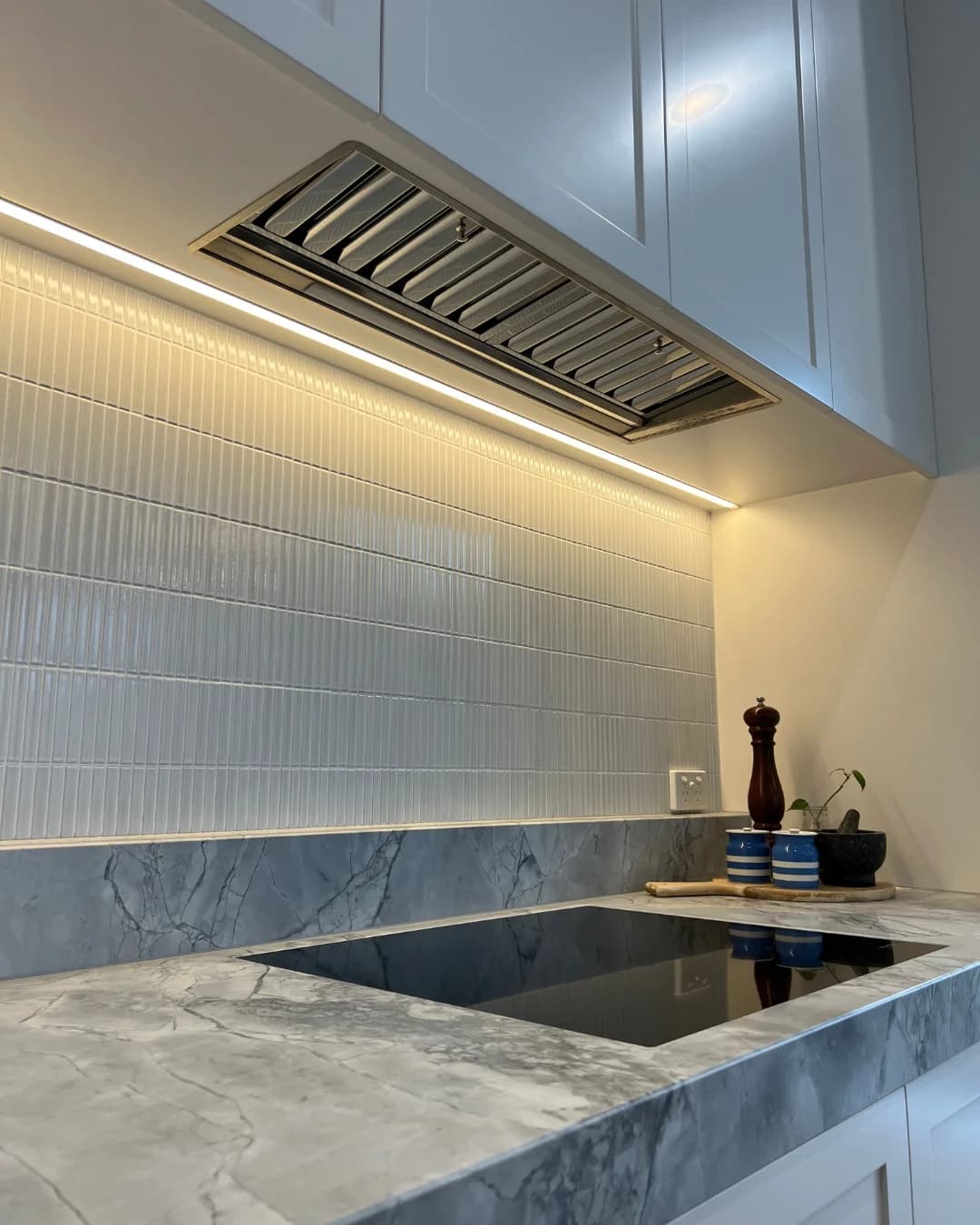
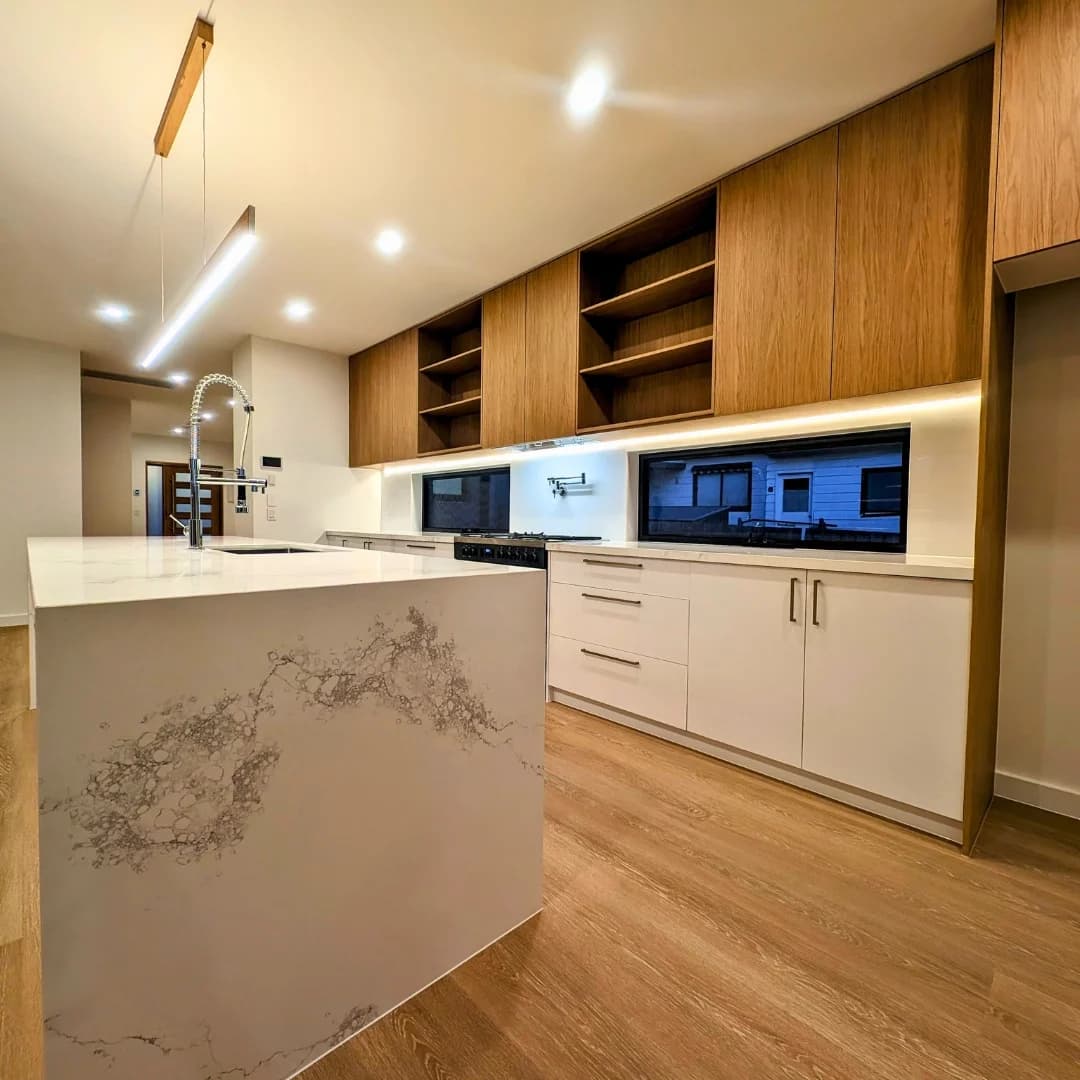
- Flat-panel or shaker cabinetry in white or light timber
- Natural stone or light-coloured engineered stone benchtop
- Open shelving for everyday items (timber brackets)
- Matte tapware in brushed nickel or aged brass
- Handmade subway or zellige tiles on the splashback for texture
Bathroom
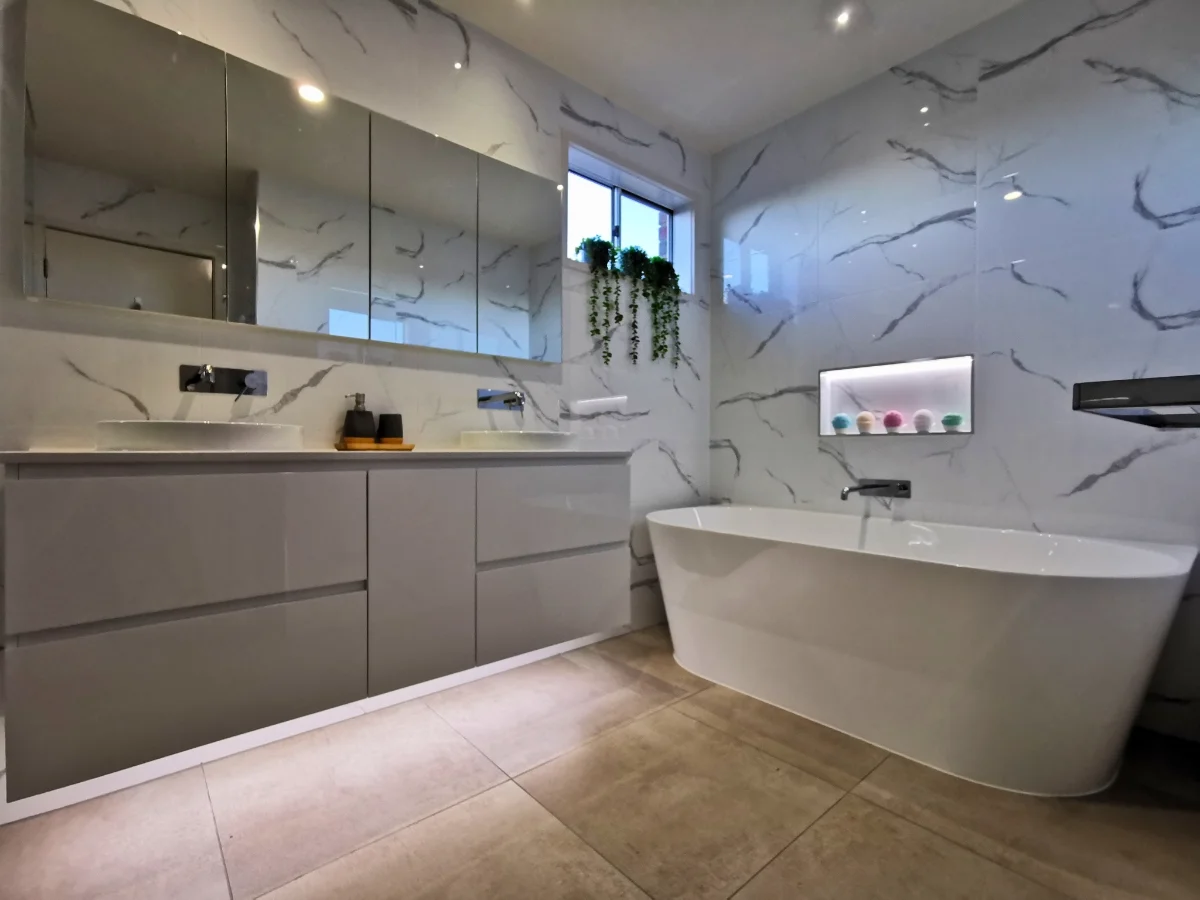
- Large-format tiles in natural tones (reduces grout lines, feels spacious)
- Freestanding bath if space allows — the hero piece in a coastal bathroom
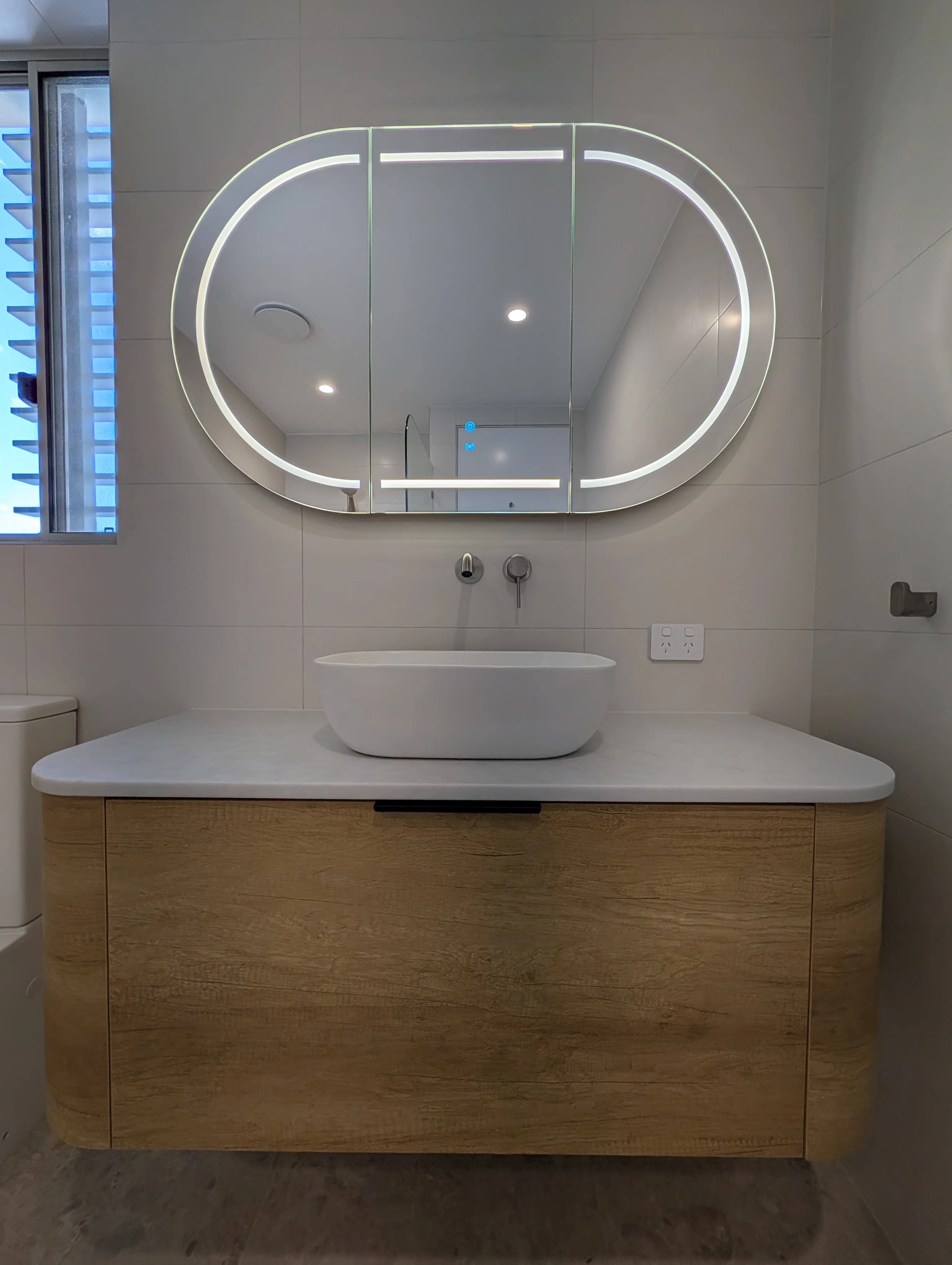
- Timber vanity with stone top
- Matte black or brushed brass fixtures
- A skylight or highlight window for natural light and ventilation
Bedroom
- Light linen bedding in white or natural tones
- Timber bedhead — simple panel or woven cane
- Pendant or wall sconces instead of bedside table lamps (frees surface space)
- Curtains in sheer fabric layered with blockout roller blind behind
- Ceiling fan — a beautiful timber-bladed fan is both functional and a design element
Materials to Avoid
- High-gloss everything — it reads "apartment display" not "coastal home"
- Dark timber floors — they show sand, dust, and scratch marks. Light timber is more forgiving and fits the aesthetic.
- Heavy, dark furniture — oversized leather sofas and dark wood dining tables fight the lightness of coastal design
- Themed accessories — shell-covered mirrors, rope-wrapped everything, nautical prints. Let the architecture and materials do the work.
The Gold Coast Difference
Coastal design on the Gold Coast isn't the same as in Sydney or Melbourne. Our climate is warmer, our light is more intense, and our lifestyle is more outdoor-focused. That means:
- Fade-resistant fabrics — UV exposure through large windows will bleach cheap textiles
- Salt-air-resistant fixtures — if you're within 5km of the ocean, specify marine-grade or salt-spray-rated hardware
- Humidity-tolerant materials — solid timber expands and contracts. Engineered timber and composite materials perform better in our climate.
- Ventilation by design — cross-ventilation reduces reliance on air conditioning and keeps interiors fresh
Book a free consultation to explore coastal design options for your Gold Coast renovation. We'll help you create a home that feels like the Gold Coast — without the clichés.