Why It Matters More Than Ever
Over the past few years, I've noticed a real change in what Gold Coast homeowners are asking for. Energy efficiency used to be an afterthought -- now it's one of the first things people raise when my team sits down to plan a renovation. As a QBCC licensed builder who's been doing this for over 25 years, I'm genuinely glad to see it, because the upgrades that save energy also make homes more comfortable to live in.
Energy costs on the Gold Coast have increased over 30% in the past three years. At the same time, building standards have tightened — new homes and major renovations now need to meet higher energy ratings under the National Construction Code (NCC 2022).
But energy efficiency isn't just about compliance or saving on power bills. A well-insulated, well-ventilated home is more comfortable to live in. That's the real payoff.
Source: Australian Government — NCC energy efficiency updates
Insulation: The Biggest Single Impact
If your Gold Coast home was built before 2003, there's a strong chance the ceiling insulation is inadequate or missing entirely. Wall insulation is even rarer in older homes.
Ceiling Insulation
- Minimum recommendation: R4.0 for Gold Coast homes (Climate Zone 2)
- Cost: $1,500-$3,500 for a standard home
- Payback period: 2-4 years in reduced cooling costs
- During renovation: if you're opening up ceilings anyway, upgrading insulation adds minimal cost
Wall Insulation
- Existing walls: can be retrofitted with blown-in insulation (cellulose or polyester) through small holes in the cladding
- New walls (during renovation): R2.0 minimum batts in external walls
- Cost: $2,000-$5,000 for retrofit; included in wall construction for new work
Under-Floor Insulation
Relevant for homes with raised timber floors (common in older Gold Coast suburbs like Southport, Labrador, and Broadbeach Waters):
- Foil-backed batts or rigid foam boards
- Reduces heat gain through the floor in summer
- Also improves acoustic comfort
Windows and Glazing
Windows are the weakest link in any building envelope. On the Gold Coast, where we're trying to keep heat out, window performance matters:
During a Renovation
If you're replacing windows, specify:
- Double glazing — reduces heat transfer by up to 50% compared to single glazing. The cost premium is 30-50% over single-glazed windows, but the comfort improvement is immediate.
- Low-E glass — a coating that reflects radiant heat while allowing visible light through. Essential for west-facing windows.
- Thermally broken aluminium frames — standard aluminium conducts heat. Thermally broken frames have a barrier that reduces this transfer.
Without Replacing Windows
- Window film — reflective or ceramic films reduce solar heat gain. Cost: $30-$80 per m² applied.
- External shading — awnings, louvres, or shade sails on the north and west sides. The most effective heat reduction strategy for any window.
- Quality curtains or blinds — honeycomb blinds provide an insulating air pocket. Better than standard roller blinds for thermal performance.
Ventilation and Airflow
The Gold Coast has mild winters and warm, humid summers. Designing for natural ventilation reduces your reliance on air conditioning:
Cross-Ventilation
Position openable windows on opposite walls to create airflow paths. During renovation:
- Add louvre windows to rooms with only one window
- Install highlight windows above doors in hallways
- Consider a breezeway design if reconfiguring the floor plan
Ceiling Fans
A ceiling fan makes a room feel 3-4 degrees cooler without changing the actual temperature. They use about 5% of the energy of an air conditioner.
- Install in every living area and bedroom
- Use DC motor fans — they're quieter and use 60-70% less energy than AC motor fans
- A fan on a 3m ceiling needs a drop rod to bring it to an effective height
Whirlybirds and Roof Ventilation
Hot air trapped in the roof cavity radiates heat into your home. Whirlybirds (turbine vents) or powered roof ventilators extract this hot air:
- Whirlybirds: $150-$300 each installed. Install 2-4 depending on roof size.
- Solar-powered roof vents: $400-$800 each. More effective in low-wind conditions.
Solar Power
The Gold Coast averages 5.2 peak sun hours per day — among the best in Australia for solar energy.
Source: Bureau of Meteorology — Solar exposure maps
System Sizing
- 5kW system — suits a typical household. Covers most daytime usage. Cost: $4,000-$7,000 after rebates.
- 10kW system — for larger homes or those with a pool or EV. Cost: $7,000-$12,000 after rebates.
- Battery storage — adds $8,000-$15,000 but allows you to use solar energy at night.
During Renovation
If you're re-roofing or doing significant structural work, it's the cheapest time to install solar. The electrician is already on-site, the roof is accessible, and you can plan panel placement without compromising the roof aesthetic.
Hot Water
Switching from an electric storage hot water system to a heat pump hot water system is one of the highest-impact energy upgrades:
- Uses 60-75% less energy than a conventional electric system
- Eligible for government rebates (currently $1,000+ through the STC scheme)
- Cost: $3,000-$5,000 installed (before rebates)
- Payback: 3-5 years
Source: NatHERS — Nationwide House Energy Rating Scheme
Appliances and Fixtures
If you're renovating the kitchen or bathroom, you're already choosing new appliances and fixtures. Make energy-efficient choices:
Kitchen
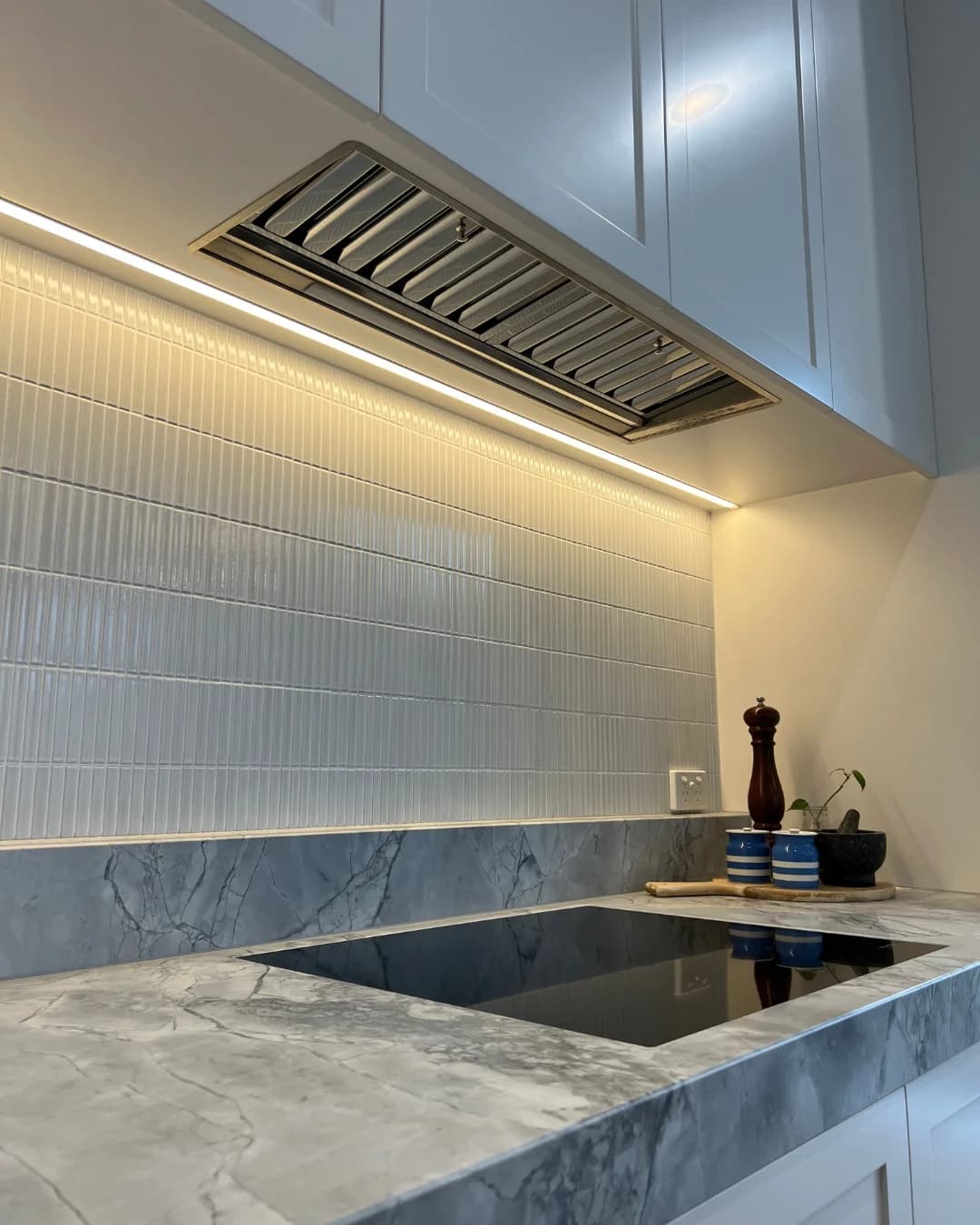
- Induction cooktop — 90% energy efficient vs. 40% for gas. Faster, safer, and no combustion byproducts in your home.
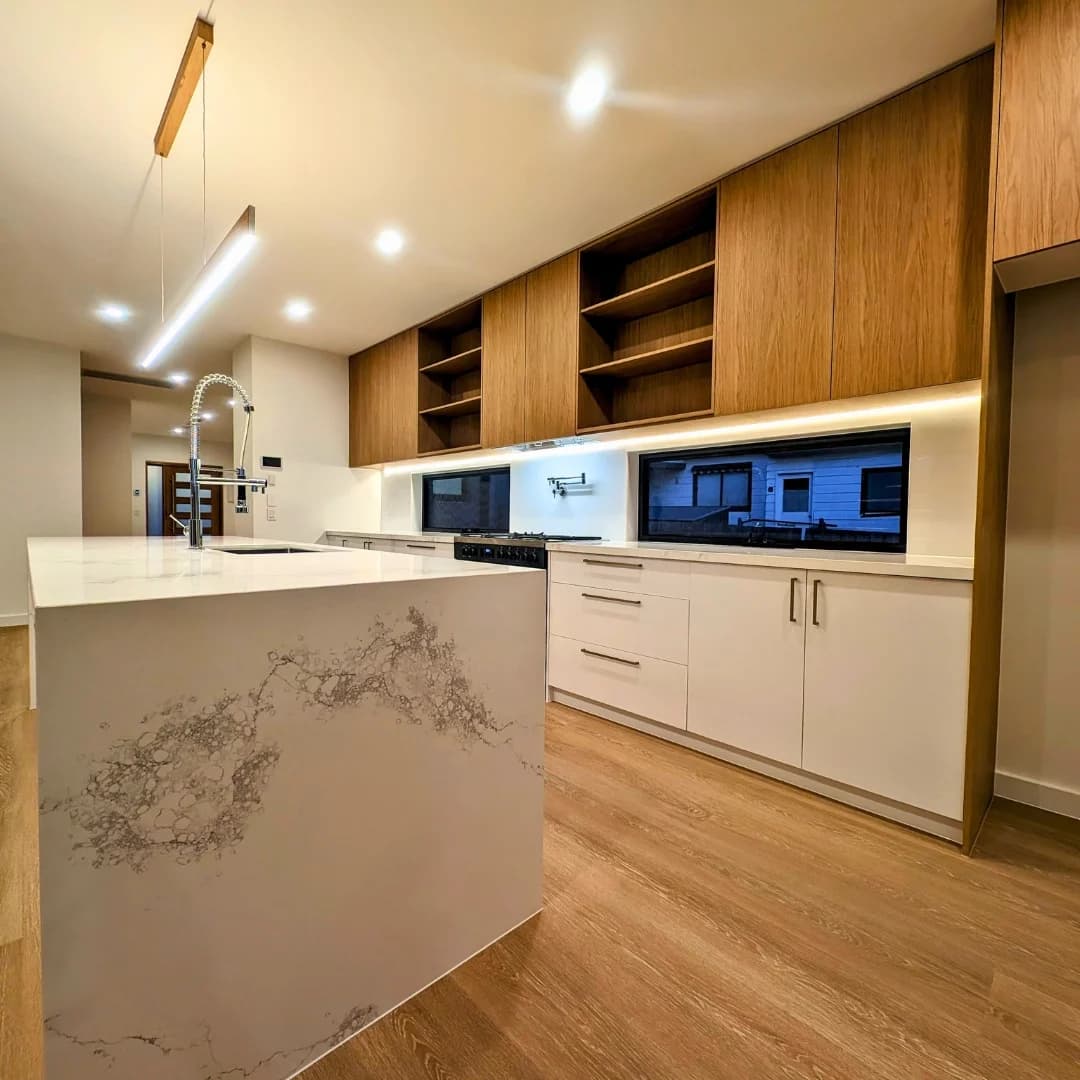
- Energy-rated appliances — each additional star on a dishwasher or fridge represents ~25% less energy use.
- LED lighting throughout — uses 80% less energy than halogen downlights.
Bathroom
- Low-flow showerheads — 7-9 litres per minute vs. 15-20 for standard heads. You won't notice the difference in pressure.
- Dual-flush toilets — 3/4.5 litre flush vs. older single-flush systems using 12+ litres.
- Tapware with flow restrictors — reduces water use without affecting usability.
What the Numbers Look Like
For a typical Gold Coast home renovation incorporating energy-efficient upgrades:
| Upgrade | Cost | Annual Saving | Payback |
| --------- | ------ | --------------- | --------- |
| Ceiling insulation (R4.0) | $2,500 | $600-$800 | 3-4 years |
| Double-glazed windows (whole house) | $8,000-$15,000 | $400-$700 | 15-20 years |
| 6.6kW solar system | $5,000-$8,000 | $1,200-$1,800 | 3-5 years |
| Heat pump hot water | $3,500-$4,500 | $500-$700 | 5-7 years |
| LED lighting throughout | $800-$1,500 | $200-$400 | 3-4 years |
| Ceiling fans (5 rooms) | $2,500-$4,000 | $300-$500 | 6-8 years |
Combined, these upgrades can reduce energy costs by $3,000-$5,000 annually.
Government Rebates and Incentives
Check current eligibility for:
- Small-scale Technology Certificates (STCs) — reduce solar and heat pump costs
- Queensland Government energy rebates — periodic programs for efficiency upgrades
- Interest-free loans — some programs offer no-interest financing for approved energy upgrades
Your installer should apply the STC rebate at point of sale. If they're asking you to claim it yourself, ask why.
Book a free consultation to discuss energy-efficient upgrades as part of your Gold Coast renovation. We'll identify the changes that make the biggest difference for your home and budget.